Attention! Manipulation ahead

manipulation_aheadHello everyone,

  • Have you ever felt that somehow you made that decision of buying this or that faster than you wanted?
  • Have you ever wondered why you’ve seen that recent best-seller just to find out it was not so best?
  • Have you wondered why every ad looks the same and uses same language tricks?

Since there are infinite number of posts these days and we as finite creatures have finite amount of time I’ll try to be as much helpful and concise as possible in my post.

Today’s post I wanted to write quite for a long time. Its topic is manipulation, kinds of manipulation and what is the difference between influence and manipulation.

At first that’s define for the sake of this post a number of terms. That’s define an influence as an evident way of affecting a person’s behavior, thinking etc. Since this act is evident to the person that’s assume that he or she can deduce if this influence is positive or negative.

And then that’s define manipulation as a hidden way of affecting a person which is unaware of this process. This definition does not state that manipulation is negative or positive. It depends on the one who is manipulating. Though according to Wikipedia it is obvious that it is negative.

Now I want to share with you templates that are used almost at any online site that tries to sell, promote any kind of product or service. What will help us to tell that there is a manipulation ahead is an interesting and educational book by Robert Cialdini ‘Influence: The Psychology of Persuasion‘ first edition dating back in 1984.

In his book Mr. Cialdini describes in concise and useful way with real examples a number of types of manipulations. Or as Cialdini puts it there are 6 principles of influence that seem quite reasonable.

  1. Reciprocity – People tend to return a favor, thus the pervasiveness of free samples in marketing. For example, have you ever felt to give back when got a gift from someone meaningful to you?
  2. Commitment and Consistency – If people commit, orally or in writing, to an idea or goal, they are more likely to honor that commitment because of establishing that idea or goal as being congruent with their self-image. For example, try once to write your current tasks or goals in a notepad and later check how many of them came true.
  3. Social Proof – People will do things that they see other people are doing. For example, have you ever heard that millions of people already using this wonderful product?
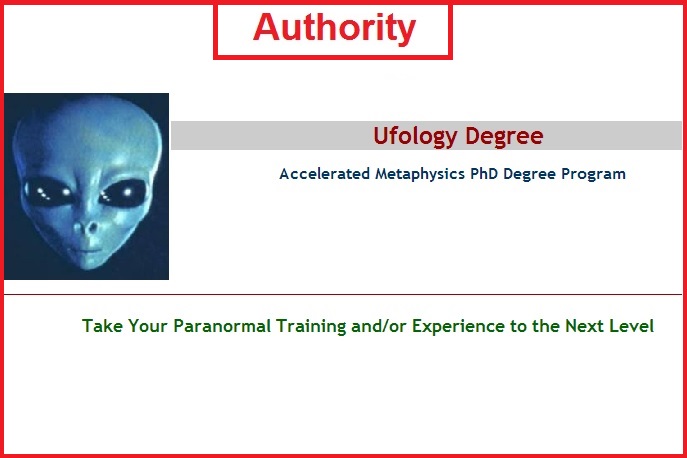
  4. Authority – People will tend to obey authority figures, even if they are asked to perform objectionable acts. For example, titles have a magic force to them such as PhD in any kind of X-phaty etc.
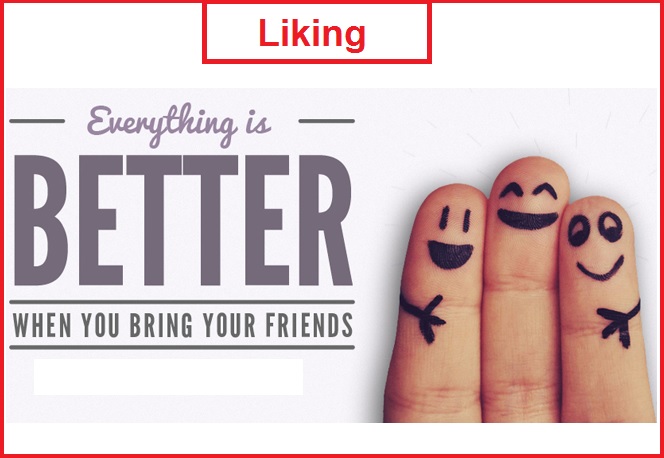
  5. Liking – People are easily persuaded by other people that they like. For example, have you ever recruited one who you liked during the interview though he or she was not a perfect fit but you’ve got the intuition?
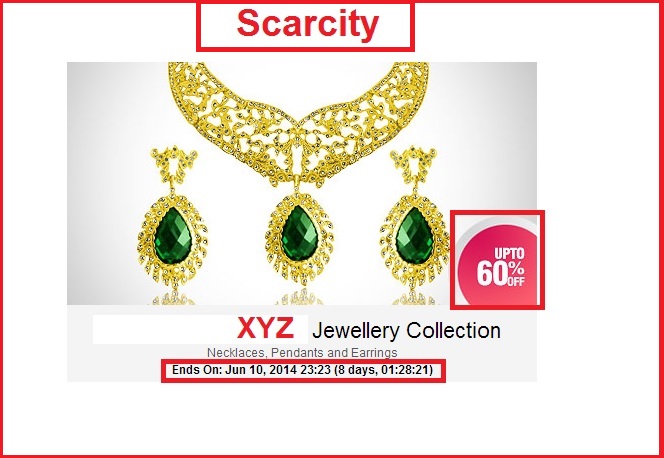
  6. Scarcity – Perceived scarcity will generate demand. For example, have you heard that the selling will only last for a few days (actually lasting a century)?

OK. Now that we know how to tell a manipulation that’s practice it on a real example.
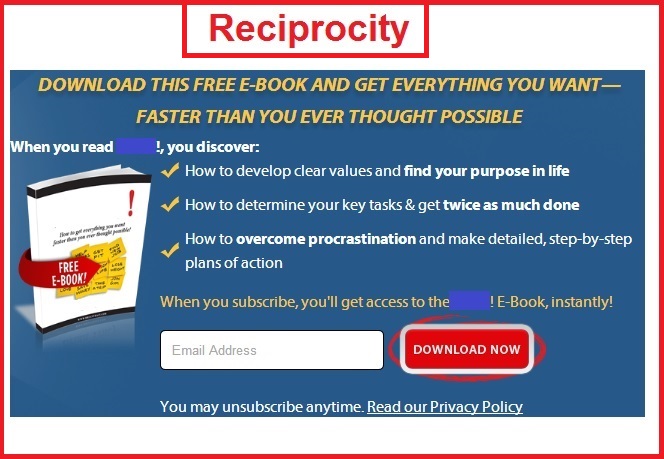
1-Reciprocity

2-Commitment

3-Social_Proof

4-Authority

5-Liking

6-Scarcity

 Main point is to tell manipulation from influence and be aware that manipulation is ahead! That’s it for today.

Thanks for your time.

Distilled Self-Help or Who is helped actually?

Hello everyone,

Today I want to write about interesting and hot topic these days as Self-help movement. And the main goal of this post is to try to figure out the useful parts of it.

The traces of the self-help moment are dated back to 19th century when the book of Samuel Smiles ‘Self-Help’ was published in 1859. Actually traces are even older if we consider works of ancient philosophers.

What really matters though is not the origins but the evolution of self-help movement and how it came to be as it is today when there are legions of self proclaimed self-helpers helping in most part enrich themselves.

But there are a number of real pearls, for my opinion, even in this sea of self-help chaos.

I think that any approach be it self-help or any other kind must have a scientific basis and must not be taking seriously without testing it first.

So according to this guideline I want to describe a number of self-help authors and their books that may be of use to you.

It is possible to split self-help movement into a number of intersecting fields. For example field that has its roots in popular psychology, pseudo-science, coaching, general literature. I`ll describe them in more details below.

I want to start from coaching field as it is called today. One of the prominent figures in this filed was Dale Carnegie who started his course on public speaking back in 1912. Dale Carnegie was a teacher and a salesman by education and used his skills to promote public speaking and sales courses becoming in effect the first coach of modern kind.

His most famous book ‘How to Win Friends and Influence People‘ from 1936 is still readable and useful. Though this book hardly may be called scientifically based it still has useful advise that may help you in everyday communication with people. Dale Carnegie leave a heritage of Dale Carnegie Training that flourish to this day.

Next one worth mentioning who was a contemporary of Dale Carnegie was Napoleon Hill. He started as a journalist that happened to meet with one of the richest persons of his time Andrew Carnegie (not related to Dale Carnegie). Mr. Carnegie  challenged  Napoleon Hill to interview prominent people of his time and figure out what made them successful in life. As a result of this challenge came a number of books by Napoleon Hill and most famous one was ‘Think and Grow Rich‘ from 1937. This book is a collection of story based advises and wisdom. So it has no science based roots still there is a zest to it that may be useful.

Another person that also comes from sales background was W. Clement Stone. He collaborated with Napoleon Hill on one of Stone`s books ‘Success Through a Positive Mental Attitude‘. Main point to be taken from the book is this quote ‘Every great man, every successful man, no matter what the field of endeavor, has known the magic that lies in these words: every adversity has the seed of an equivalent or greater benefit.‘

It seems that real burst of self-help movement was ignited by Earl Nightingale that had a radio program on self-help topics and appeared on TV. His well known master piece is the ‘The Strangest Secret‘ that was no more than motivational pep talk to salespersons at the company Mr. Nightingale worked at the time. The main point to be taken form his talk is this ‘Success is the progressive realization of a worthy goal or ideal.’

Next person who happened to start his career as salesperson at Nightingale-Conant Publishing was Brian Tracy. Mr. Tracy has produced wealth of content throughout his coaching career and the most remarkable for my opinion is ‘Maximum Achievement‘ book from 1993. If you`ll ignore pseudo-science subconscious mind stuff the book still has some insights and quotes from W. Clement Stone etc.

[Attention here comes opinionated view]

As you may have noticed there is a strong relationship between self-help courses and sales. I mean those who teach how to succeed are trying to sale there courses, books whatever in the first place. The content though sometimes important is on the second place.

There are many more self-help authors these days but those above stood out.

A few words on pseudo-science filed. I tend to put there Neuro-Linguistic Programming (NLP) though it has interesting basic assumptions, The Secret movement and the like.

And last but not least is the field of general literature, I`ll mention Richard Bach`s ‘Illusions‘  and Paulo Coelho`s ‘The Alchemist‘ as worth glancing.

OK.

Thanks for investing your time in reading this.

I hope it was worth it.

Till next time.

So it begins

OK.

Hello my name is Andrei.

If you read this post right now it seems you are here not by chance in the contrary it is like the saying ‘When the Student is Ready, the Teacher Appears.’

Now that you have read this maybe you`ll find below presentation as inspiring as I find it.

It is about Intelligent Machines as they may be Numenta.

See you soon.