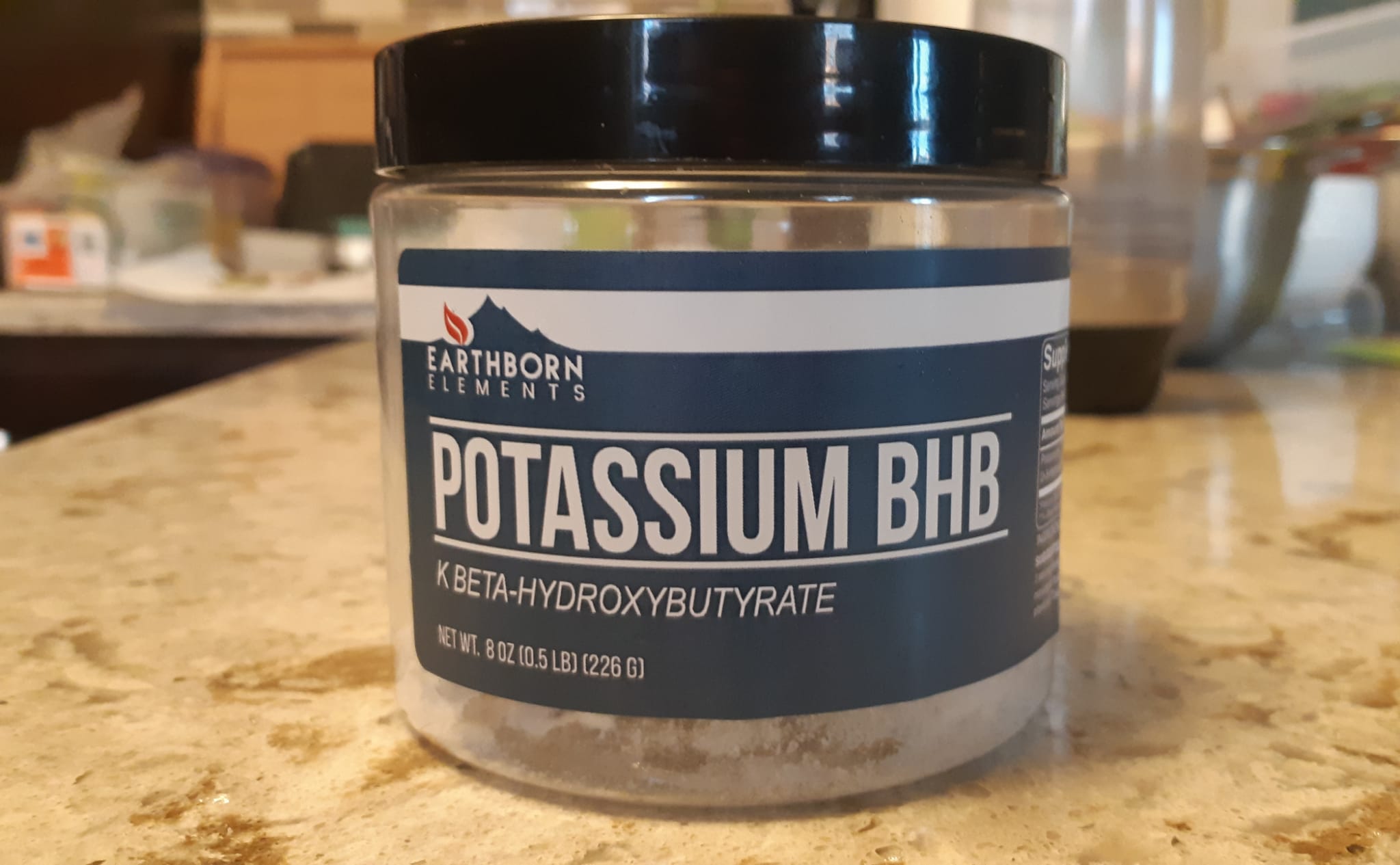
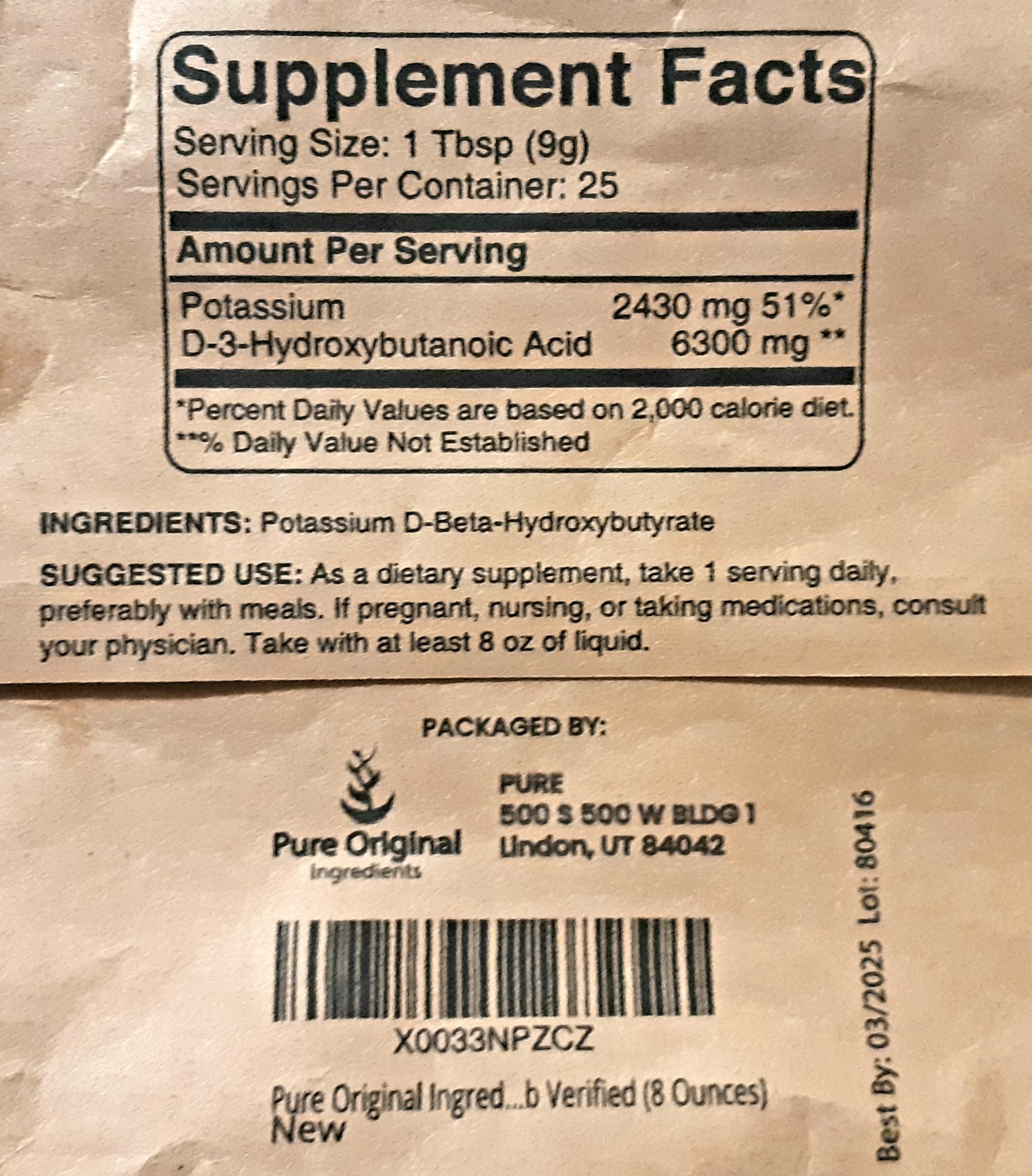
If you haven’t felt what ketosis is then the best way to do it is to use exogenous (external) ketones. For example, you can take about 10 grams of the Potassium BHB ketones salt that I periodically use to enter ketosis.
After taking 10 grams in a fasted state (about 14 hours into fast) it takes about 15 minutes to enter ketosis. And at the peak it reaches about 0.5 mmol/l of Acetone ketone in the breath.
Pay attention, that exogenously induce ketosis doesn’t feel that good. You may experience a light headache and overall feeling of discomfort. What is interesting during prolonged fasts of 40 hours long I haven’t felt discomfort to the same extent that exogenous ketosis caused.
Also, the physiology of exogenously induced ketosis is very different than the endogenous (native) one that happens during prolonged fasting.
The main difference being fat mobilization: endogenous ketosis happens when free fatty acid released from fat storage are turned into ketones, while during exogenous ketosis no fat is mobilized and to the contrary fat usage is inhibited.
So there you have it, exogenous ketosis is just 15 minutes away, but it wont’ help you lose weight. It can definitely help in preventing, or slowing down early onset of dementia, it can help reduce epilepsy seizers, and can improve sport performance though.
According to Carbohydrate-Insulin Model of obesity we gain weight when we consume food high in carbohydrates that causes insulin level to stay high thus promoting fat storage and preventing fat mobilization. This in turn causes us to eat more, for we didn’t get energy for our cells, but stored it in fat cells instead.
So, to lose weight there is a need to stop eating such foods by switching to low-carbs or ketogenic diet to lower insulin level. And, we can try intermittent fasting which can lower insulin since when you don’t eat anything insulin level goes down. Physical activity like walking, running, resistance training can be helpful too, by mobilizing free fatty acids from fat cells.
Then the question is there a similar approach applicable to social media apps addiction, such as frequently checking facebook, YouTube, X and other websites? Not only they distract us from performing any meaningful activity for prolonged period of time they also develop a kind of uneasiness and stress. The same applies to work apps like MS Teams etc., that easily distract you from whatever activity you are trying to do by messages, meetings, emails etc.
I am not sure about the work environment case, but I think it’s possible to confront this issue in a private space, by applying fasting approach to facebook, x, youtube etc. Even though I find x useful, for it contains useful information about, papers, books, interesting talks, most of the time it is very effective in wasting your time. The issue is that that time wasted while browsing, watching social media content can be invested in reading papers, books, and thinking.
Indeed, it feels like the main purpose of engaging in social media and social media itself is to prevent us from thinking about anything, for there is no time to stop and think since there is a need to scroll, click and consume the content. No energy is left to think why we are consuming the content and is it distracting, useless or even harmful in any way, like ultra processed food is.
So, one of the solutions is to abstain from social media for significant periods of time and using that free time to read paper books, printed scientific papers, to write your thoughts in a journal, and generally think about anything. I am not sure that 16/8 is applicable here especially, when your work includes working on a computer, but after the work such time off the digital realm seems crucial to be able to make any progress in a real physical world.
I guess people reading this post want to lose weight. So if you want to do it the solutions is simple!
Eat less, move more! Didn’t you know this already? For it’s only reasonable and natural. It’s the first law of thermodynamics which states that energy is conserved in closed system. Hence, energy entering the body in a form of food equals energy out. Or as also known calories in equal calories out (CICO).
So, stay in energy deficit and exercise more, for example pay for a gym membership.
Well, this advise is simple, reasonable and wrong! It’s wrong since it’s based on a false hypothesis called Energy Balance Model (EBM) of obesity.
It could work should human body have no hormones whatsoever, but it has and quite a few. Insulin isone of them that in presence of glucose blocks lipolysis (usage of fat for energy), and promotes lipogenesis (fat production and storage).
So, what’s the proper way to lose weight? Well, check Carbohydrate-Insulin Model (CIM) of obesity. The hypothesis that actually explains weight gain better than EBM and it states that lowering carbohydrates consumption as much as possible is the way to lose weight for good.
For more details, read the paper by prof. David Ludwig below
Conventional obesity treatment, based on the First Law of Thermodynamics, assumes that excess body fat gain is driven by overeating, and that all calories are metabolically alike in this regard. Hence, to lose weight one must ultimately eat less and move more. However, this prescription rarely succeeds over the long term, in part because calorie restriction elicits predictable biological responses that oppose ongoing weight loss. The carbohydrate-insulin model posits the opposite causal direction: overeating doesn’t drive body fat increase; instead, the process of storing excess fat drives overeating. A diet high in rapidly digestible carbohydrates raises the insulin-to-glucagon ratio, shifting energy partitioning towards storage in adipose, leaving fewer calories for metabolically active and fuel sensing tissues. Consequently, hunger increases, and metabolic rate slows in the body’s attempt to conserve energy. A small shift in substrate partitioning through this mechanism could account for the slow but progressive weight gain characteristic of common forms of obesity. From this perspective, the conventional calorie-restricted, low-fat diet amounts to symptomatic treatment, failing to target the underlying predisposition towards excess fat deposition. A dietary strategy to lower insulin secretion may increase the effectiveness of long-term weight management and chronic disease prevention. This article is part of a discussion meeting issue ‘Causes of obesity: theories, conjectures and evidence (Part II)’.
Today in the morning, my weight was 82 kg (180 lb).
Also, today is June 2nd and 11 days have left until it will be 2 years since I’ve started doing intermittent fasting.
It seems like a 80 kg (176 lb) weight will be a better one to celebrate the anniversary.
It means that within 11 days I need to lose 4 pounds (2 kg), and it’s better for it to be fat.
I think at this point in time after reading more than dozens of books on fasting and nutrition, after reading more than 50 scientific papers on nutrition and metabolism, after watching more than 200 videos on the subject weight loss and nutrition, and most importantly trying various approaches to weight loss I have a good grasp of how to lose these 2 kg.
Actually, losing weight is like engineering at this point. This is because when you know how it works it’s easy to calculate what needs to be done to lose weight.
The algorithm of weight loss is called Carbohydrate-Insulin Model (hypothesis, theory) of obesity.
This hypothesis says, that we gain weight when eating too much carbohydrates frequently throughout the day.
This causes insulin hormone to be released which inhibits fat mobilization, and promotes fat storage. As a consequence, the body doesn’t get the energy it expected to get from the food one ate, hence the elevated hunger and cravings. Which cause a person to eat again and again, even though she has enough energy in a form of fat stored in the body.
Now, that we know how we gain weight, to lose weight we need to do the reverse: stop eating carbohydrates, or eat less than 100 gram of them in a day, which is known as insulin lowering diet or low-carb diet. Ketogenic diet and intermittent fasting achieve the same effect by lowering insulin level, since you don’t get carbs in the system.
Pay attention, that we are not talking about eating less, we are talking about stopping eating carbs. You can eat other food that contains protein and fat without any issue. Pay attention, that vegetable oils, like soybean, corn etc. are found to be inflammatory, so olive oil is the best.
Also, saturated fat in animal products is neutral to beneficial to our health, so I eat it without any issue.
Also, sugar is a carb and that is why it and any food that sugar is added to is also a good candidate for elimination from the diet. It means food that’s out is: sugary drinks, bread and buns, cookies, sweets, sweet chocolate, natural juices etc. Ultra processed food, like chips, snacks, pizzas etc. is out too.
So, to summarize to lose weight in an engineered way I will:
Continue Intermittent Fasting regimen by having 16 hours fast, 8 hours eating window.
Continue eating mostly low carb diet, and restraining from eating food that contains any sugar.
Continue walking outside just for fun, since it’s free and affordable to almost everyone, unlike a gym membership.
Note: consult with your physician before trying this.
Magical formula
First of all, exogenous means ‘coming from outside’. Ketones are the molecules produced by the liver from free fatty acids (fat).
So, exogenous ketones are the molecules that were produced in a lab. And you can take them in a form of salt, such as ketones salts of potassium, calcium, magnesium or sodium (K, Ca, Mg, Na) or in a liquid form, such as MCT oil (medium chain triglycerides) or ketone esters.
So far, I’ve tried ketones salts of the D-BHB type and MCT oil and the combination of both in a fasted and in a fed state.
I can report that I find ketones salts more interesting to experiment with. While MCT oil is the cheapest option, it comes with the cons of easily being able to disturb digestive tract, especially, if you take at once 30 ml of it or more. If you take 15 ml of MCT oil with water it is tolerated well, but the ketones’ level will be no more than 0.3 mmol/l (which is a concentration of ketones in the blood).
In contrast, ketones’ salts can be taken up to 12 or more grams at once and they do not cause, usually, digestive issues, but may result in high minerals intake, since these salts contain a mineral molecule bound to Beta-Hydroxybutyrate (BHB) ketone molecule.
So, if you want to try ketones salts check what is a daily intake of calcium, sodium, magnesium and potassium that you can safely tolerate in a day. Also, consult with your physicians before embarking on a exogenous ketones journey.
How does it feel like?
How does it feel like to be in ketosis if you don’t want to try a ketogenic diet, prolonged fasting of 24 to 48 hours long or exercise for more than 2 hours in a row?
Well, if you want to know then you can try exogenous ketones instead.
An athlete
If you are an athlete, then research shows that taking ketones may increase performance. Also, It helps with the recovery.
An older person
If you are an older person, then exogenous and endogenous (natively produced by the body) ketones were shown to improve cognitive function in healthy people, but also in people with onset of dementia and early stages of Alzheimer’s disease.
Overweight or obese
If you are an overweight or obese person, the research has shown that taking exogenous ketones lowers glucose level, but unfortunately, it also blocks lipolysis (fat burning). So, taking exogenous ketones won’t help you with weight loss. But going on an insulin lowering diets, such as low-carb or ketogenic diets, and/or fasting can put you in a state of endogenous (natural) ketosis. In this case lipolysis is actually increased and fat is used for energy.
Overall healthy and curious person
Well, if you overall healthy and want to just experiment with new stuff, then taking exogenous ketones can be fun. Research shows that they can improve cognitive function, for example.
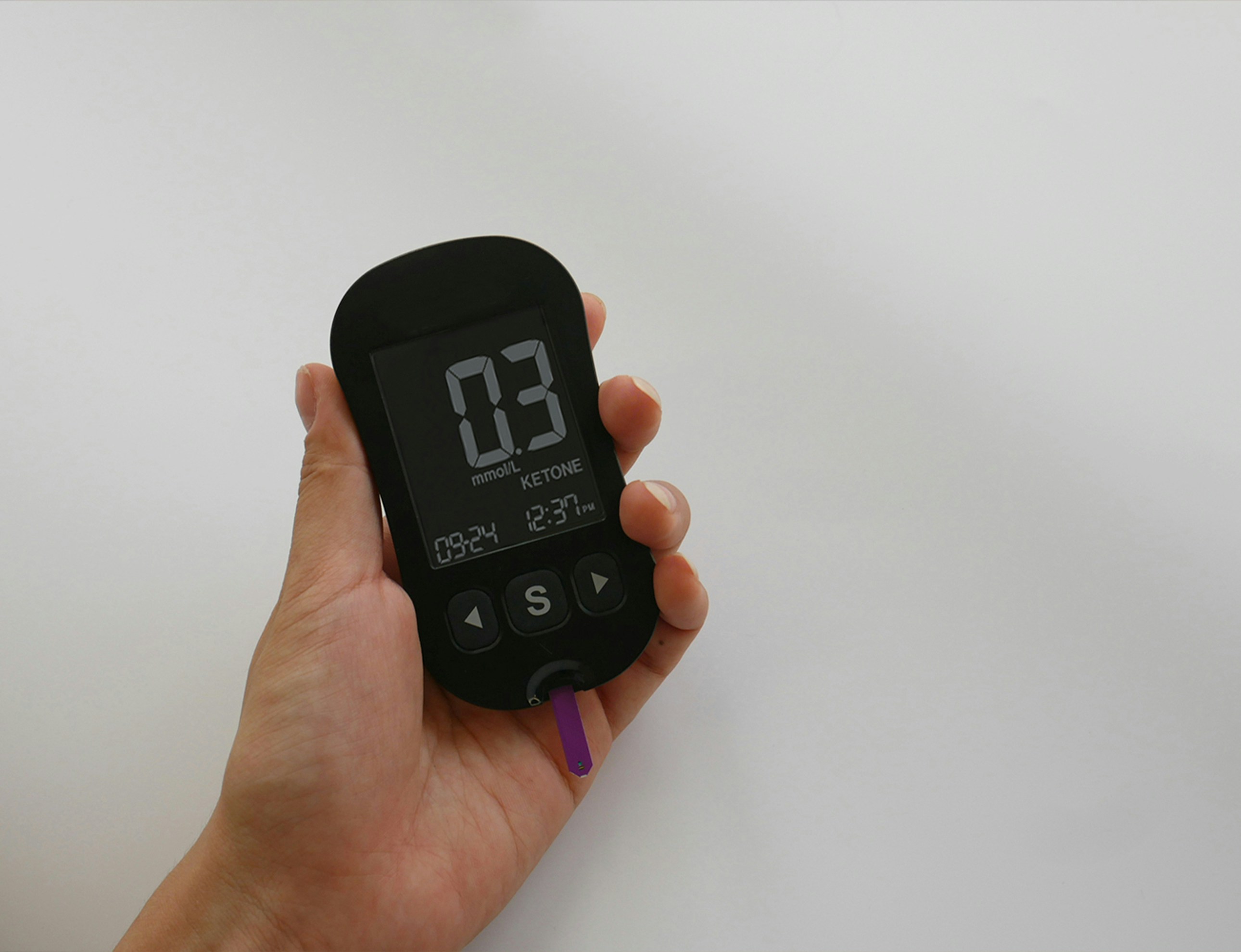
When I took 6.3 to 10 grams of exogenous D-BHB ketones salt of potassium it put me within an hour into a state of ketosis having about 0.4 – 0.5 mmol/l of ketones as was measured by digital ketone breath meter (it measures Acetone in breath).
While in exogenous ketosis I felt a light high akin to drinking a low alcohol beer. Also, I felt an acidic taste in mouth (due to Acetone ketones excreted in a breath) and tingling in lips. By the way I did 48 and 67 hours fasts and natural ketosis didn’t feel like this at all.
I am not sure that I felt improvement in mental activity, but anecdotally, I can report better ability to focus on a task at hand.
So there you have it. Exogenous ketones may be an interesting thing to try if you are in a need for new experiences and potential health benefits.
After overnight fasting of about 10 hours insulin level in the blood is very low. It means that body is using free fatty acids mobilized from adipocytes (fat cells) for energy to power skeletal muscles, liver, heart.
So to induce recreational ketosis I decided to take Potassium BHB ketones salt to do just that.
16/8 fast won’t help you to go into ketosis
Did you know that based on reading the scientific literature and my own experience measuring ketones level in breath while fasting I see that there is no ketosis even after 21 hours of the fast.
It’s concerning, and it means that doing 16/8 fast works only by using free fatty acids as an energy source, since there is no ketosis at this state. Also for ketosis to start not only insulin should be low, there is a need for the glycogen reserves in the liver to be depleted. Liver has about 100-150 grams of glycogen which varies in people.
There is this assumption that taking MCT oil or ketone salts can speed up the start of endogenous (natural) ketosis. I’ve experimented with both of them and haven’t seen this effect. One caveat, though I didn’t measure BHB ketones in blood (which is the most precise measurement you can do at home), instead I used digital ketones breath meter.
Acetone the ketone excreted in breath correlates well with the level of BHB ketones in blood.
Experiment of N = 1
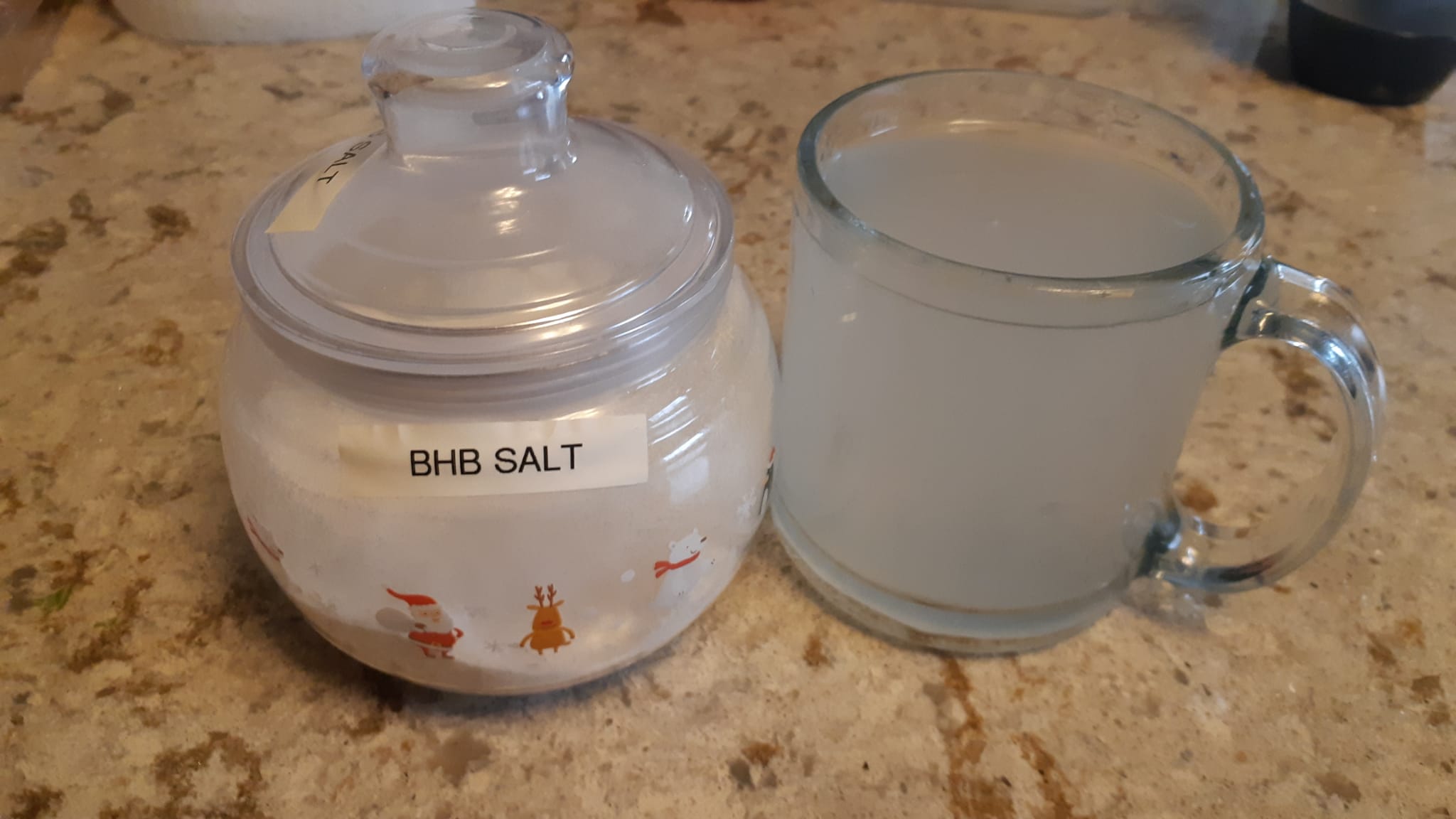
Anyway, I took about 6300 mg (6.3 g) of Potassium BHB ketones salt in 250 ml of sparkling water to induce exogenous ketosis since I find it fun. Even though it’s possible to induce exogenous ketosis while eating it’s more effective in a fasted state.
Based on the papers I’ve read it should induce ketosis within one hour with the concentration of BHB ketones in blood of about 0.5 – 0.6 mmol/l. I do measure after an hour a concentration of Acetone ketones in breath of 0.2 mmol/l.
Canada Post AddressComplete API allows a user to search for an address within Canada and other countries. Within Canada results can be in both English and French languages. There are two ways to invoke Canada Post API:
To embed css and JavaScript flies that can be copy and pasted from the Canada Post website
To directly call Canada Post API
API setup prerequisites
To be able to call Canada Post AddressComplete API there is a need to setup an account with Canada Post which will provide you with an API Key and also allow you to configure particular URLs to be able to issue search requests using that API Key.
This API Key is for all intents and purposes public, since it can be easily discovered by looking at the API calls in the Network tab in a browser’s developer tools. What prevents this API Key from being used by 3rd parties is assigning it to particular URLs that it can be called from and adding rate limiting and other options as discussed here.
Embedded css and JavaScript files
One way to integrate with Canada Post API is to add the following three tags in the head tag of the index.html page of the project.
Where the css link provides the styling for the Canada Post API script added in the script tag and the second script provides the mapping from the form fields in which you want to use Address Search to the existing fields in the Canada Post API script. More details about how the mapping is done can be found here.
Direct call to Canada Post API
It is also possible to integrate directly with the Canada Post API using their official documentation by using two Find and Retrieve endpoints they expose. More details about each endpoint will be provide below.
Address Lookup Flow
There can be a number of possible scenarios while using Canada Post AddressCompleet API to search for an address. For example, issuing a Find request will return a list of addresses that are similar to the search term used by a user.
Also, what is important each address in that list contains a Next field which can have one of two options: Find or Retrieve. This field is important when one of the search results is a street that has a number of houses or an apartment building with a number of apartments. In this case such an address will have Next field with Find value.
Possible search flow scenarios
Scenario
First endpoint call
Next Action (call)
Result
Notes
1
Look up of a single existing address
Find
Retrieve
Detailed address returned by the Retrieve request
2
Look up of a street or an apartment building address
Find
Find with LastId value from the first call
List of houses/apartments
In this case there is a need to issue additional Retrieve request to get a detailed address.
3
Look up of a specific address by ID from Find request result
Find request endpoint is described in this official page. Its purpose is to look up addresses similar to the search term provided by the user. This endpoint has the following parameters
NAME
Mandatory
TYPE
DEFAULT
DESCRIPTION
Notes
Key
Yes
String
API Key
SearchTerm
Yes
String
The search term to find. If the LastId is provided, the SearchTerm searches within the results from the LastId.
URL encoded
LastId
No
String
The Id from a previous Find or FindByPosition.
URL encoded
Country
No
String
CAN
The name or ISO 2 or 3 character code for the country to search in. Most country names will be recognised but the use of the ISO country code is recommended for clarity.
LanguagePreference
No
String
en
The 2 or 4 character language preference identifier e.g. (en, en-gb, en-us etc).
MaxSuggestions
No
Integer
7
The maximum number of autocomplete suggestions to return.
It is possible to submit request to this endpoint for free using Canada Post website.
Example request:
https://ws1.postescanada-canadapost.ca/AddressComplete/Interactive/Find/v2.10/json3.ws?Key=<your< API Key comes here>&SearchTerm=390&Country=CAN
Response body
The response consists of Items list with addresses as elements.
Pay attention, as described in the possible flows above, if returned address element contains Next field with the value Find it means that to get detailed address there is a need to issue additional Find request with the LastId set with the Id value from that address element.
For example,
First Find request with Search Term: 234 Drinkwater St
The response from the web service is a table containing the elements below. Where no items are found, the response will be empty list (although all endpoints specify the columns). If an error occurs, the response will be an error table instead.
NAME
TYPE
DESCRIPTION
VALUES
EXAMPLE
Id
String
The Id to be used as the LastId with the Find method.
CAN|PR|X247361852|E|0|0
Text
String
The found item.
2701 Riverside Dr, Ottawa, ON
Highlight
String
A list of number ranges identifying the characters to highlight in the Text response (zero-based start position and end).
0-2,6-4
Cursor
Integer
A zero-based position in the Text response indicating the suggested position of the cursor if this item is selected. A -1 response indicates no suggestion is available.
0
Description
String
Descriptive information about the found item, typically if it’s a container.
Since we are talking about web service here the errors that it returns are returned with 200 response while the error itself is contained in the body of the response. Details about all possible errors can be found on Canda Post website.
Example of an error response
For example, the general error below is shown when the API Key is not assigned to get requests from a particular URL.
{
    "Items": [
                {
                        "Error": "5",
                        "Description": "Request not allowed from this URL",
                        "Cause": "The request was disallowed from the URL.",
                        "Resolution": "Check the security settings on the key first. If they look fine, please contact
                        support as it may be from a URL on our blacklist."
        }
    ]
}
Retrieve endpoint returns the full address details based on the Id, which is returned as a result of the Find request.
As was mentioned in the possible flows section above, initial Find request returns a list of addresses that closely match the search term used by the user. Each address contains an Id field. This Id should be used to issue Retrieve request. You can try the request for free on Canada Post website.
Parameters
Each request to the web service requires the following parameters. You can create any number of keys, each of which can be reported on individually and have specific security settings.
NAME
TYPE
Mandatory
DESCRIPTION
DEFAULT
EXAMPLE
Notes
Key
String
Yes
The key to use to authenticate to the service.
AA11-AA11-AA11-AA11
Id
String
Yes
The Id from a Find method to retrieve the details for.
The response consists of Items list with two elements: first element is the address in English, second element is the address in French.
Response Fields
The response from the web service is a table containing the elements below. Where no items are found, the response will be empty list (although all endpoints specify the columns). If an error occurs, the response will be an error table instead.
Below are the errors specific to this web service. If an error occurs, an error table like the one below (but containing a single row) will be returned. (Developers should test for a 4-column table with columns “Error”, “Description”, “Cause” and “Resolution”.)
ERROR
DESCRIPTION
CAUSE
RESOLUTION
1001
Id Invalid
The Id parameter supplied was invalid.
Try again, using only IDs from the Find services.
1002
Not Available
This record contains data that is not available on your account.
Please contact support to upgrade your account.
Example of an error response
For example, the general error below is shown when the account has no money balance to allow for queries.
{
        "Items": [
                {
                        "Error": "3",
                        "Description": "Account out of credit",
                        "Cause": "Your account is either out of credit or has insufficient credit to service this request.",
                        "Resolution": "Please check your account balance and top it up if necessary."
        }
    ]
}
References
This is a github repository containing React with classes implementation of two possible ways to integrate with Canada Post AddressComplete API as was explained before. Pay attention that to install the dependencies there is a need to use yarn.
You’ve probably heard that brain cells need glucose and that’s why you need to eat high carb foods. Well, it’s true, but not completely correct.
If you eat standard western diet high in carbohydrates, and eat on average 6 or more times a day, indeed your body will use glucose for energy most of the time, excluding periods of overnight fasting. It means that your brain cells almost most of the time use glucose for energy.
But if you are on a low-carb, ketogenic diets and/or doing intermittent fasting, then there are periods in a day, and in case of keto it can be throughout the day, that you brain cells will switch to using ketones for energy plus using glucose too.
If your doing prolonged fasts longer than 24 hours, say 48 hours or more or strict ketogenic diet, then brain cells will switch to using ketones as the main energy source.
In his lecture prof. Stephen Cunnane described an interesting finding that brain cells consumption of glucose is independent of the level of glucose in blood. He calls this glucose pull. It means that brain will use more glucose for energy only when brain cells are more active, say you are thinking hard on a particular task, like playing chess.
It means that even if you consume a lot of sugar, energy drinks, fruits etc., it won’t help your brain metabolism, unless your brain works harder.
On the other hand, if there are ketones in your blood, then brain will try to use them as a fuel preferentially as much as possible. It means that when the level of ketones increases in the blood, brain cells will use more of them. Prof. Stephen Cunnane call this push of ketones.
Takeaway
To summarize, brain cells do need glucose, but glucose neither most efficient nor preferred brain fuel.
The use of both glucose and ketones as the brain’s two main fuels is governed by five principles: First, two distinctly different strategies regulate the use of glucose and ketones by the brain, a concept we call ’Push-Pull’ (Cunnane et al., 2016a, b). Brain glucose uptake is controlled by brain cell activity. Glucose is transported into the brain via glucose transporters in response to brain cell activation (Pull), so it is largely independent of blood glucose concentration. In contrast, ketones are transported into the brain via monocarboxylic acid transporters directly in response to plasma ketone concentration (Push), not brain activity. Hence, when ketones rise in the blood, they are immediately transported into the brain, an effect not seen with glucose.
If you struggle to lose weight following various diets and training regimens then there could be a couple of issues with your approach. But the most import thing to understand about weight loss is that you need to really know the root cause behind weight gain and what to do about it.
Blindly trying diets, without understanding how they work if at all, and going to the gym may cause a slight weight loss. But, most probably, you’ll gain weight back as soon as you stop following a diet, which happens to most of the people.
So what is the root cause you may ask?
Well, if you don’t have a rare genetic condition, then, most probably you are overweight, obese, pre-diabetic or even having type 2 diabetes due to excessive consumption of carbohydrates that causes Insulin level in the blood to be high throughout the day. This causes Insulin resistance in the long run in two ways: glucose in food you eat causes high level of insulin in the blood and fructose in food you eat causes high level of uric acid that causes insulin resistance indirectly.
As soon as insulin hormone is high in the blood it causes excess glucose in the blood to be stored as fat, and also prevents utilization of the fat that you already have as energy for the body.
Also, when insulin level is low, when you don’t eat for a period of time, due to fasting or after overnight fast this allows the body to use fat deposits that you have as energy for the body, hence weight loss.
Now, that we know that weight gain in most cases is caused by frequent consumption of foods rich in glucose and fructose, the solution is quite straightforward – there is a need to lower carbohydrates intake in any possible way. It can be a low-carb diet, it can be a ketogenic diet, it can be intermittent fasting alone or in combination with low-carb or keto. That’s it.
There is no need to be on a regular caloric restriction diets which cause you to be always hungry and have lower metabolism. There is no need to buy an expensive gym membership or any other sport equipment.
What you may find useful when you start losing weight is that you become more energetic and may find walking, which is free and affordable, enjoyable.
Personally, having been overweight for more than 10 years since my 30’s until 40’s, I wasn’t able to lose weight doing sport exercises or following a diet.
What helped me, was starting Intermittent Fasting regimen almost 2 years ago. Since then, I was able to lose 22 pounds (10 kg) and maintain this weight.
Yep, you’ve heard it right. It has been almost two years of quite effortless weight maintenance.
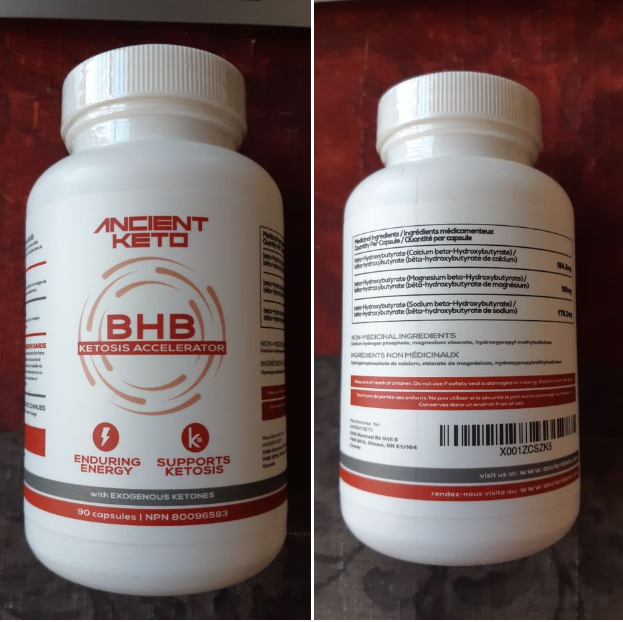
These Beta-Hydroxybutyrate (BHB) ketone salts work.
I’ve noticed people complaining that they took these pills as prescribed on the bottle and saw no results:
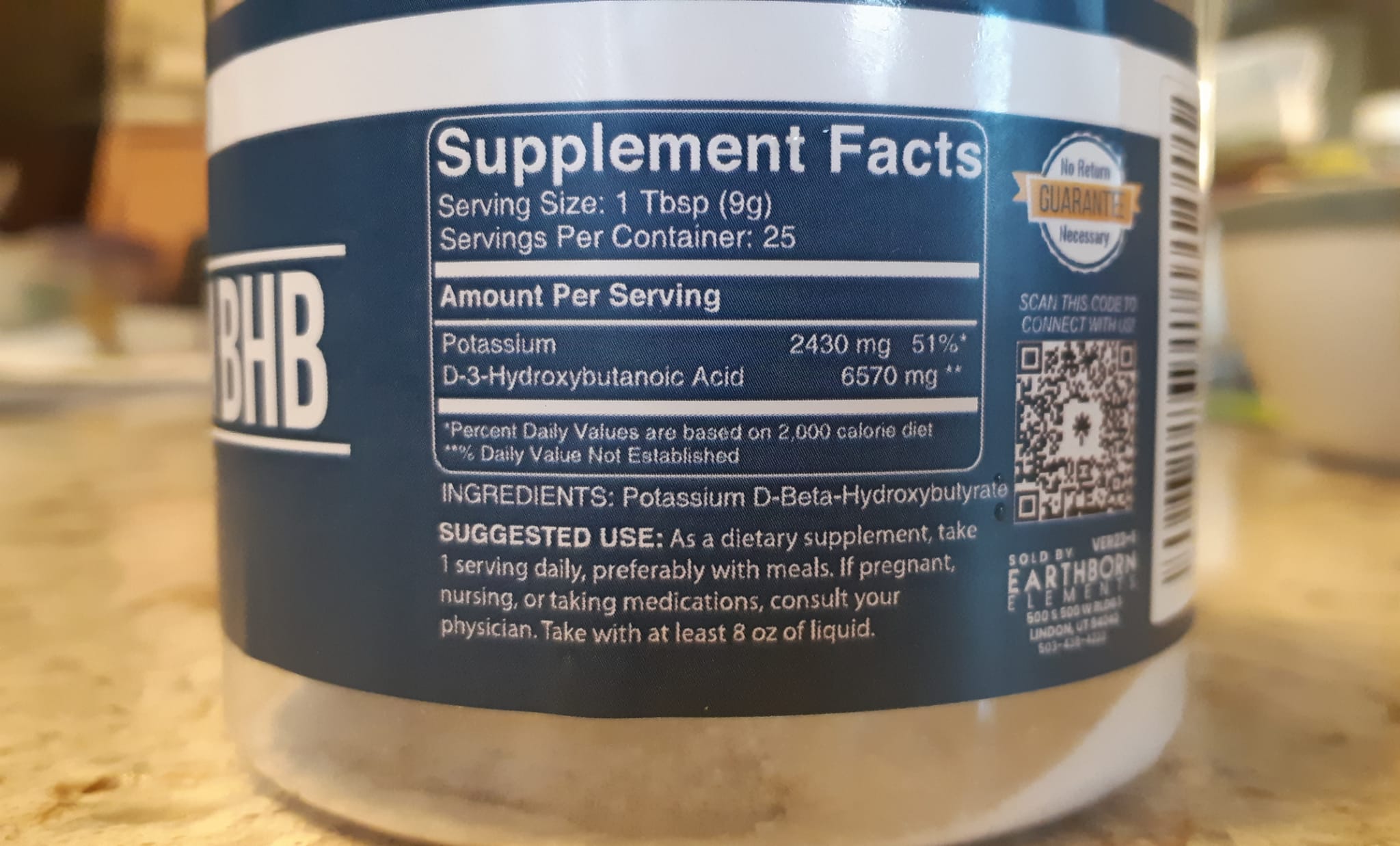
3 pills taken 3 times a day, which is 9 pills. The package information says that 1 pill contains about 0.542 grams of BHB salts.
Well, there is a big problem with such prescription. And the issue is as follows.
Scientific studies that are available at PubMed Central (PMC) show that the smallest does that was shown to induce exogenous ketosis was 3.75 grams at once taken twice daily.
Taking into consideration that 1 pill contains only 0.542 gram it means that to get 3.75 grams of BHB salt to induce mild ketosis (0.7 mmol/L after 15 minutes as was in the paper below) [ref #1], one needs to take:
Note: In the study #1, they gave ketone salts to juveniles, it means that for an adult to get 0.7 mmol/l of ketones you need to up the dose to about 10 or even 15 grams of ketone salts. I’ve taken 10 grams at once of Potassium D-BHB ketone salt and was able to measure only 0.5 mmol/l using Digital Ketone Breath Meter which measures Acetone ketone in breath.
So, it means you need to take at least 7 pills at once, while the bottle has only 90 pills in total.
Now, you can see why you see no results after taking 3 or even 6 pills at once.
What can you do?
1. If you usually practice Intermittent Fasting for at least 16 hours, then your body, most probably, is already got used to producing ketones. Then, possibly, you don’t need to take more than 6 pills at once to induce ketosis on the last hours of your fast. Pay attention, studies show that BHB salts are much more effective taken in a fasted state [ref #2].
2. If you practice ketogenic diets or very low carb diets, then too, you possibly can induce exogenous ketosis between meals with 6 to 9 pills taken at once.
3. If you do intensive exercises like cycling, spinning or weight training for at least 60 minutes or more, then, again, in a resting period between meals taking 6-9 pills at once may help you induce ketosis.
In other cases, studies show that regular people who don’t practice one of the above need at least 3.75 grams of BHB salts taken at once! [ref #1]
Moreover, the dosage in various studies was 3.75 grams, 7 grams, 12.75 grams, 22.1 grams, 42.2 in one sitting! [ref #3].
So there you have it, taking 3 pills, 3 times a day won’t work for most of regular people.







 ScienceAppliedForGood